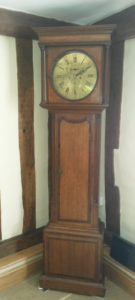
A mantle clock and a giant Egyptian DIY obelisk

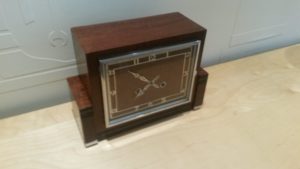
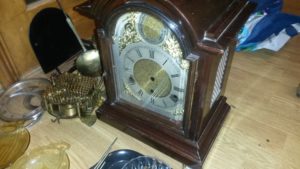
I recently undertook a clock repair and restoration for a friend in Braintree. It was a complete refurbish with two mainspring replacments as well as a strip down of the wood and replacement of the glass. It took absolutely ages and was particularly difficult as the varnish on the clock had to be stripped back and redone. All in all a very satisfying result.

Clocks such as this Smiths art deco example are becoming increasingly rare. The movements tend to have a full westminster chime with quarter hours. They wear out and it is often the case that they have to be replaced with a modern equivalent if one can be sourced. I managed to salvage and restore all the original components apart from the springs themselves which were replaced by new modern equivalents.

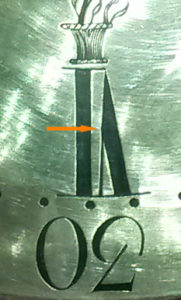
The clock was placed in the sitting room, beatifully framed by the back wall wich featured an Egyptian white relief inspired by Egyptian tomb art. All hand done and DIY. That was just the beginning of the surprises however.


egypt2

When I delivered the finished clock I was shown round the house and garden which were spectacular. The friends in question were very keen amateur egyptologists and had decorated their house with Egyptian art and sculpture. It was only when I saw this in the garden that I realised these people were SERIOUS Egypt fans.

egypt1I estimate that this home made obelisk is about 25ft high. It was constructed from concrete reinforced with steel bar. Thats what I call commitment. The absolutely best thing about clock people is that they appreciate the better things in life. I meet tons and tons of the nicest people you can imagine and all have a story to tell. Theres something about mechanical clocks that attracts the more interesting people and they are all a pleasure to meet.
Replacing a broken mainspring in a mantle clock

This is just a quick article to show you roughly whats involved and how you go about things if you want to replace a broken clock mainspring. Its quite a challenge on any clock so Ive selected a particularly simple movement to show whats done. This article is for somebody who already knows how to take apart and put back together a simple movement – a beginner with a bit of talent. Mainspring breaks and replacements are a common problem so I thought I would do an overview article on roughly whats invloved and how to go about it.

How do you tell if your clock mainspring is broken?

You can tell if your mainspring is broken because the clock key will offer little or no real resistance when you try and wind the clock. If the spring has broken in the middle this may be a little different; in this case the clock will wind for maybe two or three turns but then you will hear the spring move and the resisitance on the key will go down again. In either case you will need to have it replaced.

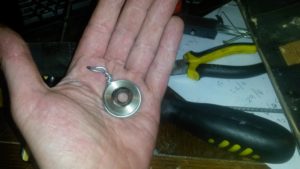
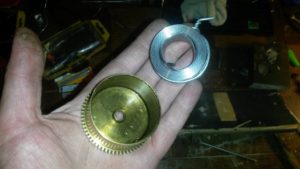
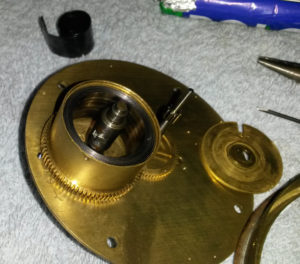
As you can see from this picture the main spring here has broken and needs replacing. Note the that spring has broken about five or ten centimeters from the barrel spiggot and there is still about 120 cm of spring braced tightly to the edge of the barrel.

Removing a broken clock mainspring

To remove this force  a sharp wide object (I used a sharpened bradel) in between the wound spring layers. You want to lift the spring so you can get some long nosed pliers in the gap. Once you have done this grip the spring with the pliers and STOP.

20160614_121408

If you pull the spring out now it will unwind like a whip cracking and you could easily be injured because your likely to be holding the barrel with your other hand and this is the area the spring will be at its most dangerous.

To avoid this wrap it in a towel so you can only the handle of the pliers sticking out of what should look like a big chelsea bun or turban (sorry turban guys – no offence meant its just that if it looks like a turban your doing it right!).

Now you can pull the spring out with the pliers and the towel will dampen the expansion of the spring. When you see it go “splong” you will realise the turban towell is a very good idea indeed. If its a thick spring e.g. the spring thickness looks over half a mm then take particular care and double towel it – the spring is strong and will unwind like a flying blade. I have injured myself hurrying things and not bothering with the towel – unwise, and the sort of thing you learn early and quickly in clock tear down and rebuild.

Once the spring is out then you need a vernier gauge or micrometer to measure the spring in order to source an identical replacement. If the movement is worn then you might like to go for a stronger thicker spring but not by more than .1 or .2mm.  This can put a bit of life into the chiming spring if the coggs are worn in the clock and its all a bit loose.

How to measure a broken clock spring and how to search for one online.

Springs are measured in three dimensions for specifications purposes. Firstly the thickness which ranges from .3mm to about .7mm for a typical mantle clock. Your going to have to bend a portion of the spring flat in order to get an accurate reading. An accurate reading to .1mm is essentail for success and if your not sure round the number up as opposed to down.

The second measurement is the height of the spring – typically between 15 and 40mm. 40mm is likely to be quite a thick spring as well – simply dont attempt these larger ones – genuinely dangerous. As a first timer really dont attempt anything over about 20mm and thats pushing it. If your going to have a go at this the best idea is to buy a cheap old broken clock and dismember it on the assumption its not going back together again – a training clock in essence.

Lastly you might think that the third dimension would be the length, but it is not, it is the barrel width, or more accurately the internal barrel width. A vernier guage should be used to measure this last dimension. So, the spring I used in this clock is described as a .3 x 20 x 30; a relatively weak and safe spring to work with.

Preparing your replacement clock spring

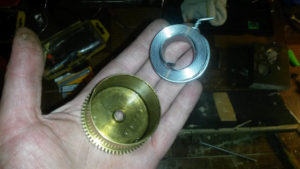
Your spring will arrive from your supplier looking like this.

Bespoke_Clock_Spring_Barrel

Before going any further lubricate the spring with clock oil. Soak it and then dry off the excess. If you have been lucky enough to source a spring that is 3 to 5mm less in diameter than you need for the barrel, then you can just put in in there. The problem is that if you go for this option the spring overall may not give you the 8 days of wind you ideally want or worse, it might not provide enough power to drive a worn movement. The movment is likely to be worn because a spring will last a good 30 years in my experience.

Installing the new clock mainspring and about spring winders…. do you need one (yes = safe, no = highly risky)

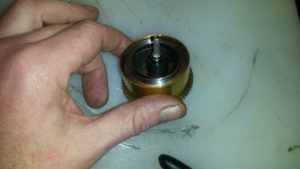
To insert the spring into the barell use the wire wrapped round the spring as a brace agains the top of the barrel wall and then push the spring in while the wire remains braced above / on the barrel edge to about 3mm. I have found that tapping the spring in this way slowly until its almost released for the wire is the best way and then finally give it a fairly punchy hit with a flat object – a flat piece of wood is ideal if you place the wood on the top and then hit the wood with a mallet. if your lucky the spring will go in completely flat but this rarely happens. The edge of the spring is more than likely sticking up at the edges. You need to correct this or the barrel cap wont fit back on. To do this use a screwdrive or flat punch to kock the spring edge in flat. Do this bit by bit around the entire edge until you can see tha the barrel cap has enough room at the edges to to back on flat and in line with the barrel circumference edge which will normall have inset seating in the barrel you can see.

You will also need to line up the hole on the outside of the barrel with the peg inside the barrel wall that is there to hold it when wound. If you find you miss it dont worry to much as this will either correct itself when you wind the spring or it will stay in place which is perfectly ok, if not perfectly correct. It will also lead to some premature ageing on the spring but nothing you need to forcast for e.g. 20 years. The peg inside the barrel is the reason a 30mm diameter spring will not slide into a 30mm barrel fully.

This is why you need a spring winder. Strictly speaking the spring should be unwound fully (released from its wire holdings) and then rewound and rebound with wire in the same fashion as before. In short you need a spring winder to do the job properly. These can be bought from online and you need to look at a few to decide which one you really need based on the sizes of springs your intend to work on. I tend to work on a lot of mantle clocks so thats what I bought mine based on.

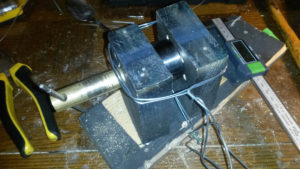
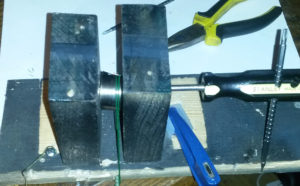
For an experiment I built my own spring winder. I was not too ambitious with the design and opted for one that would handle only one spring type. It really wasnt that difficult although I wouldnt dare use it on anything over a relatively safe and weak guage spring as there were several “malfunctions” during its prototype phase  and during use.

My honest advice on this “do it yourself spring winder” is dont attempt it because its dangerous as well as painfull when a spring unwinds on your fingers. I am very used to working with springs and know what Im dealing with in terms of forces and tolerances – you probably dont yet so proceed carefully with any of your own inventions if you find yourself compelled to tinker. I have to say I had great fun building this jigg and it was not as easy as I expected. I wouldnt do it again in light of the risks and various injuries I sustained.

20160615_223647

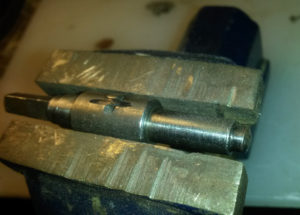
In essence you can see whats going on from the picture. The only thing you cant see is that the shaft of the screwdriver has a spiggot on it.

I embedded this spiggot with an HSS drill bit and using good carbon steel for the spiggot itself but made sure the screwdriver was soft \ cheap and therefore easier to drill. The green wire holding the springkeeps it taught and fixed at the outer edge, while the scredriver is turned to compress the spring. As you turn the handle the spring compresses and reduced diameter. Every few turns you measure diameter with a vernier guage. This is the point I sustained most finger bruises and cuts because I had to get close to the spring to measure it and measuring invloved touching it – a bad idea as I found out.

Its easier to drill lower quality steel when you make things generally speaking and you really need a couple of hundred pounds to buy a standing industrial quality drill for any kind of engineering clock repair. I had one already of course but if you want to cost this all out well… ehem is all I can really add. The point of building this was simply to see if it could be done and connect a little bit with the ethos of the clock makers of old. Us clockists really respect the early makers and methods simply because you realise people did all this precision mathematically driven work with hand tools and jiggs. It really is astonishing when you look at some of the pre 1800 clocks and take on board the level of engineering and mathematical knowledge that is essentail in the production of a hand made clock. This is my little contribution to the craft…appalling effort, but an effort none the less. And it worked.

20160615_235441

Alligning the barrel spiggot on a new clock mainspring.

Once youve got the spring in the barrel the next important part is making sure the spiggots hook catches the spring when you turn it clockwise. You will see how this works when you do it. Its likely you will need to bend the spring towards the centre of the barell so that its pressed against it when its at rest and vertical. When you bend the spring with long nosed pliers DO NOT bend the part of the spring where the inner hold is located. The spring will overbend in this area and its also possible to bend it unevenly and differently on each side of the hole. This will lead to the spring edge being on a tilt where it connects to the spigot and can mean the hook will not be able to catch the hole as its rotated. To test if your spring connects with the spiggot correctly you need to fit the barel cap and then turn it quite aggressively. It needs to hold so there is no point of being gentle with the rotation. If it slips you will feel it, so you then remove the barell cap and re-adjust again (and again and again) until its all catching perfectly and you are absolutely sure its secure.

20160515_222407

The reason I emphasise this testing proceedure is that if you put the whole movement together (which can take literally days on a complicated job), and it doesnt work…you have to do the whole thing all over again in terms of dissassembly / assembly.

I hope this article removes some of the trepidation for the first time spring replacement jedi trainee and I am more that happy to provide Yoda like adivice via email if you have a project you need some basic assumtions confirmed or general questions answered.

If you want me to do it for you just give me an email or ring and I can quote you on the spot if im in the workshop.

Above all – have fun with it. Its great to undertake a job like this and complete it; you really feel like youve taken a genuine step forward in your clockery expertise. I still get a buzz out of fitting a spring – your working with high tension components and you need to be careful, organised and check list based in your approach because mistakes can cost you the spring and whatever it costs for an ambulance these days….read on.

Safety Stuff that is actually worth reading and not here because I want to bore you do death.

Seriously on that point – safety. Some things you really do need during this from start to finish, if you dont have them then buy some as the very first job on the project list. Safety kit hampers movement and the speed you can work at but its essentail unless you want to lose an eye or finger. It also allows you to work more confidently as the strength of clock mainsprings generally is greater than you would expect without any experience.

  1. Wear good tough gloves for all operations where the spring is under pressure.  You neet gloves with good all round protection, knuckls and the back of your hand are the bits that take the punishment so dont bother with gardening gloves!. Thick leather are my recommendation. The rule is that they only come off when the spring is in the barell and your in the safe zone.
  2. Dont attempt a home made experimental winder like mine if you are using anything over .3mm strength as even those pack a punch when they unwind when you make a mistake.
  3. You would have to be mad not to wear eye protection on this job. Its ABOSOLUTELY essentail. Your often looking at the spring from the angle that puts you at maximum risk – the direction it will instantly unfurl like a flying blade. If you dont wear eye protection that blade will take your eye out.
  4. Work with your head at least a couple of feet (60cm) away from the wound spring at all times. This is a job you do at arms length.

Dont do this job when you are distracted or at risk of distraction. Distractions interupt important processess and if you return from and interuption maybe you absent mindedly took off your safetey glasses off to put your reading ones on…. an easy mistake to make and potentailly very dangerous.

Be safe and enjoy yourselves – always happy to hear from you.


Alan Turing Vs Early American Clocksmiths. (Clocks win).

TuringClockJPG
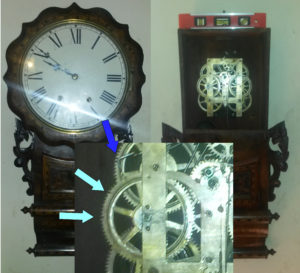
This fantastic clock is probably a Walsh or Anosonia. Its better quality than most so probably walsh. Its a computer and I happen to know the movement type was patented in 1872. Alan Turing invented his machine in 1936 and was hailed as a genius. Us clock dudes had been doing it for ages we just didnt wave our bunsen burners around and start whooping like turing. Heres the bit from wiki about turings machine. My (Davids ehem!) clock does all these things. From Wiki…
 
The Turing machine was invented in 1936 by Alan Turing,[11][12] who called it an a-machine (automatic machine).[13] With this model Turing was able to answer two questions in the negative: (1) Does a machine exist that can determine whether any arbitrary machine on its tape is “circular” (e.g. freezes, or fails to continue its computational task); similarly, (2) does a machine exist that can determine whether any arbitrary machine on its tape ever prints a given symbol.[14] Thus by providing a mathematical description of a very simple device capable of arbitrary computations, he was able to prove properties of computation in general – and in particular, the uncomputability of the Hilbert Entscheidungsproblem (“decision problem”).[15]
 
The picture shows the clock using what is effectively a punch card system based on a cog with the “holes of the card” being extra deep cuts in the cog teeth spaces. These are spaced out at 1, 2, 3 etc teeth intervals.
 
The blue arrow shows the lever coming down and the lighter blue arrows show where it will stick as opposed to being read as “pass” or blank or whatever!.
 
As usual clocks are the answer to everything earlier than everything else.

Repairing and Electric Pendulum Wall Clock

Read this is your looking to repair an electric pendulum clock from the 80’s as it could save you a lot of frustration on ordering cock ups if you want to have a go yourself. But dont do that – get me to do it ;-).

Rather than reproduce the hints Ive just pasted an email I sent to a recent enquiry – its got all the info and you can see how I approach my jobs / customers at the same time!.

“Its likely to be a high tork electric pendulum movement. I did one today – a Seiko. Its a walk in the park to fit it providing you confident with getting the hands off the front. These might just pull off or there might be a screw or lynch pin holding them on. Remove the hands and replace the movement with an identical one and you are done. Finding an identical one is either easy or mindbendingly boring. Essentailly there are probably 5 movement types available globally on ebay. If you have one of those then its and easy job. If not you have to buy a donor clock – basicly find your clock or one using the same movement and then use that.

The things its easy to mess up if you are taking the DIY approach.

1. Spindle length. This is how far the nose of the movement stick out. If its not enough it wont clear the clock face and if its too much the nose hits the clock glass and stops the hands.

2. Hand appeture width. You have to vernier guage your hands inner holes and then order the right option with the movement. Its that or alternatively use the hands that come with the new movement. This isnt as bad as it sounds – most movements can be bought with a reasonable choice of hands. This link is the sort of thing you are after but I can advise on the exact item once you have sent a photo.

http://www.ebay.co.uk/itm/Takane-Westminster-Chime-Pendulum-Quartz-Battery-Movement-to-fit-a-5-8-Dial-/231909567469?hash=item35fee32bed:g:YK0AAOSw8RJXCrsP

If you dont want to go through what is mostly specification and ordering hassle then get me to do it. Cheers, Justin”

Packing and sending clocks to avoid transit damage – how to do it properly

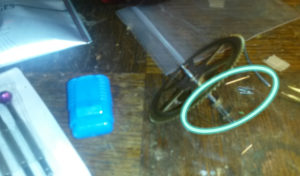
When you send a wall or long case clock, or even a mantle clock there are a few rules to obey if you want the thing to turn up working when it is upacked. The most important thing is to unwind the clock. To to see how to do this follow this link. If you dont unwind the clock and the clock loosens up in transit from vibration or knocks then the lynch pins holding the plates together can fall out. The end result of this is probably easier to explain with a mataphor. Imagine you had a safety pin connecting the two sides of yoru rib cage togther. Releasiing it will result in the ejection of your inards. This, in the case of the clock, happens rather violently and often causes serious damage to the coggs themselves see below where the bar courousel has lost some of its spiggots.

I redrilled the holes in inserted new rods by the way – the clock is back to its excellent functioning self. The blue ring highlights the corousel and its stantion bars taken out for replacement. You cannot do this without a high precision thick drill and I was using a cobalt .3mm bit. If you mess up the positioning of the bars the whole clock will cease to function so do be careful if you are attempting this yourself.

Coggrepair

The other really important thing to do when transporting a clock is to remove the pendulum. Even if you cant see its fixing you can still lift it which should be enough to un-mount it from its hanging point. If you dont do this then two things will happen during transport.

  1. The clock will not function on a flat surface or vertial wall mount. The anchor escapement will need resetting befor you can hear it tick tock again,
  2. If the pendulum is loose it its case it will bounce around and possible damage the clock mechanism as well as almost certainly breaking the leaf spring its supposed to hang on.

If you have a clock you would like repaired thats come to you as a box of bits just give me a ring!.

Clock on people.

Justin

Oh – heres the clock it came out of. An absolute corker. American turn of the century with a movement that moved me!. Really nice one.Ansonia Clock Repair


Bespoke mainspring production

Making a main spring for a clock from scratch

When you need a new mainspring in a movement its normally possible to source a unit from a range of sizes and variations. There are a number of online retailers who supply enthusiasts and trade customers like me.

Every now and again you come accross a spring that cant be sourced. In these cases I have to manufacture the spring from spring strip. This is quite a process and I thought I would share it with you.

Before I continue I feel compelled to say that this is not something you should attempt yourself. Its dangerous when a spring uncoils uncontrolled and you are essentailly dealing with a high speed out of control carbon blade. So dont do it.

My method is very old school because I enjoy setting myself the challenges of the original craftsmen. It produces a much more authenic product and means that I really get to know my components very well. This allows me to predict and tailor how they will perform when installed. And its great fun high kudos clockery of course.

Heres a quick picture journal of one I did today.

This is the basic raw material. In this instance is 145cm length, 2cm height, and .5mm thickness suitable for a 45mm barrel diameter. Theres a calculation you have to do I wont bore you with.

Bespoke_Clock_Spring

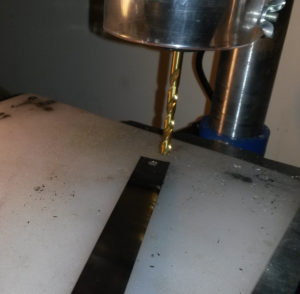
The next shot shows the end holes being drilled. The spring wire is so carbon toughened that you cant drill it without first heating the area to be drilled red hot. This reduces the stresses in the metal, burns the carbon out, and makes it closer to mild steel the more you heat and slowly cool. Drilling still requires a cobalt bit in my experience, or HSS if your on a budget. I normally use cobalt because they are stiffer and hold their position well. HSS tend to skate a bit on hard surfaces and are unusable on a hand drill. My drill is a bench mounted unit which is an excellent investment as a general tool anyway. The bit bellow is HSS simply because cobalts of that guage are quite pricey. HSS is better for larger bits!.

Bespoke_Clock_Spring_Hole

Compressing_A_Clock_Spring

Compressing the spring requires a modern spring winder (boring) or a wooden jig with a central metal core for the winding. The jig needs to be braced with wire before any pressure is applied. Once its tight all round then the spring is wound. The picture above shows the wound spring ready for fixing with a wire retainer.

20160515_202755

The end result is the bound and coiled spring ready for insertion into the barrel.

20160515_222407

Once the spring is pressed into the barrel its ready to fit the arbor.

Bespoke_Clock_Spring_Arbor

I always cut a deeper fastening point on the arbor for good measure and to ensure it catches the spring firmly if the clock is ever reverse wound (which disengages the arbor so dont do it).

Thats a quick overview of how its done on a bepoke. If its a stock spring you can see which bits I dont have to do although the majority of the work on a spring change is getting the entire movment disassembled as the spring is really deep in the heart of the mechanics.

How to tell if your clock spring is broken

If you think you have a broken mainspring and would like me to replace please give me a call. You can tell your mainspring is broken by turning the key – if it meets some resistance and winds a bit bofore “slipping” you know you have a break in the middle of your mainspring. If the key turns with no resistance than that is better news as it means the spring may have slipped its arbor and can just be reconnected as opposed to replaced which is about half the cost.

Main Spring Clock Repair – Modern Bracket Clock

Main spring replacement is something you should consider as part of a regular e.g. 10y yearly, service on a mechanical clock. Over time even the best springs will lose thier power as they are wound and released. If you are thinking of getting your clock serviced because it keeps stopping unexpectedly then think about getting the main spring done at the same time. Yes it does double the cost from about £60 to over £100 but the spring itself accounts for the majority of this higher service cost. Overall, if you plan to own the clock for your lifetime its the best way to go about things and actually cheaper than cleaning and spring replacment as two different services delivered on two jobs.

The pics here show a relatively modern 14″ bracket clock. Its a beauty for a modern clock and really has gravitas in much the same way as a grandfather clock does. Its become another clock on my wish list but that is already impossibly long as I tend to bond a bit with all the clocks I work with.

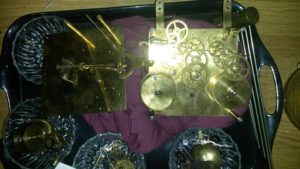
The pics show the movement re-assembled ready for its new spring and top plate refitting. Note the excellent condition of the movement overall – the point here is that it can look as clean as the day it was sold but over time the spring will wear down. This clock was running consistently for 4 days on an 8 day spring and fading over time. If you have the same problem you know who to call!.

Bracket_Clock_Repair 20160515_021528


Mora Clock Repair

mora1I recently repaired this Mora clock. These are quite rare now and originated from 18th century to the middle of the 19th. They are really good looking clocks and thier shape in sweden is as iconic as the grandfather clock you or I would envisage.

This particular clock is old and I am advising the owners to reasearch it a bit as it is marked A A Anderson on the front who was the very first Mora clock maker operating from Ostnor in the middle and end of the 18th century.

To find out more about Mora clocks visit this link to its Wikipedia entry which covers all the basics.

The main reason for this post is really just to show a rare clock however a few lessons were learned by the owner as part of the repair. The most important of these is that whenever you ship a pendulum clock it is essentail to remove the pendulum. If you dont do this then the pedulum will jump around and either bend, break or crease the leaf spring on which it is suspended. Hope you like the clock and for more about Mora clocks.

VW Camper Van Clock Quartz Repair / Conversion. (Smiths Clock T2 76-79 OE Style Black Face 12v AC957069)

Smiths Clock T2 76-79 OE Style Black Face 12v

VW Camper Van Clock Quartz Repair / Conversion. (Smiths Clock T2 76-79 OE Style Black Face 12v AC957069)


I was asked to do this by a client. Its not that difficult to do but you will need:

  1. Mini or handheld angle grinder iwth thin disks
  2. An electronic quarts movement. Get long one with a 20mm spindle. It doest matter if its a bit larger or smaller by a mm or two. You
  3. A donor clock e.g. a 1970s plastic carriage clock from a charity shop – MUST have a ticking second hand.
  4. Superglue
  5. Araldite / epoxy ashesive or P38. I used araldite but wished Id gone for p38 car body filler.
  6. white spray paint (optional)
  7. blu-tak

How to do it

  1. Uncrimp the brass ring on the edge of the clock with a small screwdriver. Just lift it enough so you can wrangle it off. If you bend it too much you will deform the edge of the brass that shows which is a bit of a bummer dude (hey your probably a surfer reading this article!)
  2. Remove the hands. These are friction fitted pulll off easily.These you are going to replace these although you can use the old ones if you need to. To use the old ones you will have to use your imagination a bit as they are guaged to fit a spindle that no longer comes as an option on modern movements. You WILL however keep the lovely orange ticking hand if you undertake this conversion.
  3. Take of the brass ring and glass plate as well as the inner ring and face.
  4. You will see the movement now. Take it out. It is fixed to the tin chasis at the back on a small solder point. Break this and just get the movement out.
  5. Angle grind the top layer of the jelly mould shaped casing. This creates a nice round hole to work with.
  6. Place blutak on the rear corners of the movment and put it in place so the that spindle is central to the face. Check this by putting the face on. You MUST align the movement to the “12 o clock” postion or it will suck.
  7. look at the back of the assembly. You will see the battery compartment slightly exposed and what you have to cut away to completely expose the compartment. You obviously need to be able to change the battery after all.
  8. Cut / add the battery hole and you should end up with something that looks like an arched door shape.
  9. You can leave the blu-tak in place for the next bit. You need to mix up the araldite adhesive and then pour it around the movment while avoiding getting any on the time adjustment wheel on the movement (or you will glue it in place and freeze the setting of your clock forever!).
  10. One  its dried put the face on again and the black ring. You will notice the spindle is supporting the face. This is no good so cut movement shaped bits of carboard (with a hole for the spindle) and stack them on the front of the movement so that it sits on them as opposed to the spindle. Now glue all the layers together with impact adhesive. The last thing to apply glue to the rear of the face and then place it in position.
  11. Stick a small scredriver into the face plate holes for the two black headed face screws and then simply push them into thier holes. They will adhere with the glue thats soaked into the carboard beneath.
  12. Take the carriage clock you bought from a charity shop that has a seconds hand. You can see it fixes to the face by means of a small cylinder that fits on the seconds hand spiggot. You need just the tube so remove it with a mini angle grinder – you need to preserve as much of its length as you can.
  13. Remove the plastic insert in the original seconds hand that is encased in a spring on the base of the hand.
  14. Insert the spiggot tube you salvaged into the spring casing you now have free on the seconds hand.
  15. Your movment will have come with aluminium plain hands. These can be easily shortened and fashioned with a file or wet and dry paper so they look at least like the originals. You will need to spray paint them white or if you want to be flash, just off white like the originals.
  16. Lastly angle grind off the time changer in the glass in the face. You dont want the bar poking in to set the time anymore so just get rid of it as you will find sombody will push it and shear off the new hands you put on. You can superglue the outher knob on to keep the look.
  17. Put brass glass face on and you are done. One repaired  and converted T2 76-79 OE.

If you cant be bothered with all this you can buy a new one for about £125, but as you can see from the price its time well spent refurbishing the clock. Also you get an accurate modern clock in the van.


#Clockgate

For a very long time now I have waited for a call to come in asking for assistance in repairing a clock that has suffered party damage in the abscence of parental law. Today it happened.  These two are responsible for it. I cannot name them –  on these types of black operations we dont use names.


Copy of IMG-20160501-WA0000

The official story is that they were sipping at a half of shandy while discussing the merits of charity work when they noticed a kitten trapped behind the clock. There was no time to waste as the cat could also have been hungry as well as trapped. Obviously the clock needed hacking into with a fire axe and then a good kicking.

d1 d2I


In normal circumstances it would be fair to predict a really really good hard bollocking accompanied by various agressive sanctions on personal freedom and finances. That is unless you can get some idiot to come out on bank holiday Sunday, not charge you a fortune and enter into the conspiracy with you. It would also be a bonus if the same person could get the clock running and actually leave the clock better working order than before it was abused by the reckless actions of a kitten.

Copy of IMG-20160501-WA0004

All part of the service and a landmark day for me. Thanks guys.